Crypto Holders Face a Massive Custody Warning
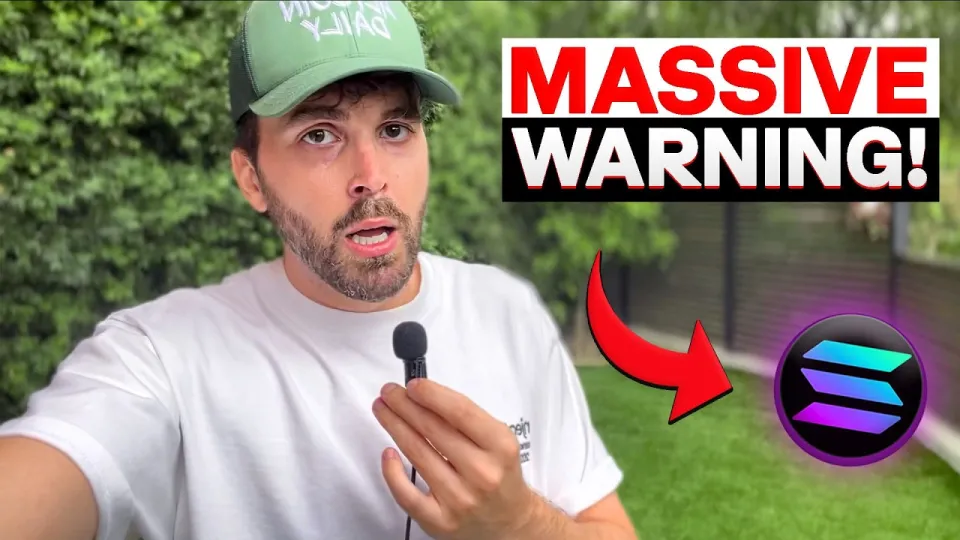
Video: My MASSIVE Warning To Crypto Holders
You can order the same kind of articles for your own video to boost it on YouTube and Google. Just message the Telegram bot @sat_sit_bot. Articles with your video embedded are written and posted by the bot itself — on popular topical sites (no ads). Try it free: 50 articles on us.
· based on the channel Altcoin Daily
Crypto holders face a real risk that has little to do with price charts: the platform where the coins sit. The core warning is that leaving long-term holdings on an exchange or broker turns a self-directed investment into a claim on a company that can freeze withdrawals, change terms or fail. The practical answer is to separate trading balances from long-term storage, keep only working capital on platforms, and move the rest into self-custody; new accounts can start through the Weex welcome bonus page, but the bonus should never decide where savings live.
What the crypto warning actually covers
The warning is about counterparty and custody risk, not about a specific price target. Altcoin Daily builds the segment around the gap between what holders believe they own and what they legally control when coins sit on a platform: the balance in an account is an entry in a company's database, while the keys to the underlying asset belong to that company. That distinction matters most in stress — during withdrawal pauses, hack disclosures, bankruptcy proceedings or sudden account restrictions, the holder has no way to move the asset unilaterally.
The second layer is regulatory. Pressure from regulators tends to land on the intermediaries that touch customer funds — exchanges, brokers, custodians and payment apps — because those are the entities with licenses, bank relationships and identifiable officers. Assets without an issuer or a central operator sit in a different category than tokens sold and managed by a company. The practical takeaway for a holder is to know which side of that line each position falls on, and to size the position accordingly.
Why self-custody changes the risk profile
Self-custody converts a claim on a company into direct control of an asset, and that changes what can go wrong. With a hardware wallet and a written seed backup, the failure modes become physical and personal — a lost backup, a phishing signature, a compromised computer — rather than corporate. Those risks are manageable with routine, while a platform freeze is not something a customer can fix from the outside.
A workable routine looks like this:
- Keep a trading balance on an exchange only for positions that will be closed within days.
- Move long-term holdings to a hardware wallet and verify the receive address on the device screen.
- Write the seed phrase on paper or metal, store it offline in a second location, and never photograph it.
- Test the recovery process once with a small amount before moving a large balance.
- Review every token approval and signature request instead of signing blind.
Altcoin Daily returns to the point that holders underestimate how quickly access can disappear, and treats custody hygiene as the first defense rather than an advanced topic 00:00.
Regulation, intermediaries and asset selection
Regulatory risk is not distributed evenly across a crypto portfolio. The parts most exposed are the on-ramps and off-ramps: fiat deposits, withdrawals, brokerage accounts and payment apps that hold customer balances. The parts least exposed are networks with no issuing company and no one to compel — the category most holders already treat as core holdings.
That produces a simple sorting exercise. For each position, ask who can change the rules: a foundation, a company treasury, a staking operator, or nobody. Tokens with an active issuer carry governance and disclosure risk on top of market risk, and they also carry the heaviest compliance burden when rules tighten. Assets with no central operator do not become risk-free, but their risk is market and network risk rather than counterparty risk. The same logic applies to yield: a lending market or a brokerage sweep account is a contract with an operator, and the advertised rate is compensation for that exposure.
Typical questions from crypto holders
Holders keep raising the same practical doubts, and most of them reduce to one question: where do the keys live?
- Are mainstream brokerage apps safe enough? They are convenient and regulated, but the coins are held in the app's custody, and some products are lending arrangements rather than direct ownership. Check the account agreement before treating a balance as long-term storage.
- Does this mean avoiding lending protocols entirely? No. It means understanding that depositing into a lending market is a contract with code and governance, and that the deposit is only as safe as the collateral and the oracle design behind it.
- Is the biggest risk simply staying out of crypto? Opportunity cost is real, but it is a different kind of risk from losing access to coins. A holder can address both by owning a core position in self-custody and keeping experimentation small.
- Why do some large-cap names never come up? Coverage choices are editorial, not a signal. Build a thesis from the asset's own fundamentals rather than from which tickers a channel mentions.
- What about the long-term price outlook? Multi-decade price talk is entertainment, not planning. Position sizing and custody decisions should survive a bad year.
Building a portfolio that survives a platform failure
A portfolio that survives a platform failure is built on separation: separate the trading account from the storage wallet, separate the core position from the experiments, and separate the emergency reserve from the crypto allocation entirely. Concretely, keep an amount on exchanges that you would be comfortable losing, hold the rest in self-custody, and never let a promotional bonus or a yield figure pull long-term savings onto a platform.
Concentration deserves the same treatment. A portfolio split across a handful of large, liquid networks with no single issuer is more resilient to regulatory action than one built around a token whose roadmap depends on one company's license. Diversification across custody methods matters as much as diversification across coins: one hardware wallet, one seed phrase and one exchange account is a single point of failure, not a diversified setup.
Where to register and what the offers include
Two promotional links appear in the segment, and both should be treated as account-opening offers rather than investment advice:
- Weex welcome event — deposit bonus: the exchange's new-user campaign page with the referral code applied.
- Bitunix registration — bonus for new accounts: sign-up page tied to the channel's referral code.
Before using either, read the terms on the campaign page: bonus amounts usually come with trading-volume requirements, time limits and withdrawal conditions. A bonus that requires heavy trading can cost more in fees and risk than it pays out, and neither offer changes the custody argument above.
Conclusion
The warning for crypto holders is straightforward: the coins are only yours when you control the keys, and everything else is a claim on an intermediary. Altcoin Daily's breakdown is a reminder to audit where each position sits, to keep trading balances small, and to treat regulation as a risk that lands on platforms first. Start with the boring work — a hardware wallet, a written backup, a tested recovery — and only then look at offers, including the Weex deposit bonus for a new trading account. The video breakdown was produced by the Altcoin Daily channel.
Key takeaways
- Altcoin Daily frames the warning around platform and custody risk for crypto holders, not around price predictions.
- Holding coins on an exchange means the platform, not the holder, controls the private keys and can freeze withdrawals.
- Regulatory pressure is shifting toward intermediaries such as exchanges and brokers rather than toward decentralized assets themselves.
- Coins with no issuer and no central operator, such as BTC and ETH, carry a different regulatory profile than tokens run by a company.
- Self-custody with a hardware wallet and a written seed backup removes exchange counterparty risk from long-term holdings.
Source: My MASSIVE Warning To Crypto Holders · Markdown version
Questions & answers
Is it risky to keep crypto on an exchange?
Yes, because the exchange holds the private keys and the balance is a claim on the company. Withdrawal pauses, account restrictions or insolvency can leave a holder unable to move coins, regardless of the market price. Keep only working balances on platforms and store long-term holdings in self-custody.
Do regulated brokers and payment apps count as self-custody?
No. Regulated apps offer convenience and consumer protections, but the assets sit in the provider's custody, and some products are lending or sweep arrangements rather than direct ownership. Read the account agreement before treating such a balance as long-term storage.
Which coins are least exposed to regulatory pressure?
Assets with no issuing company and no central operator, such as BTC and ETH, have a different regulatory profile from tokens managed by a foundation or company. They still carry market and network risk, but there is no single entity that regulators can compel or that can freeze customer access.
Should a bonus decide where I open an exchange account?
No. Bonus campaigns usually come with trading-volume requirements, deadlines and withdrawal conditions that can outweigh the reward. Choose a platform on fees, security history and withdrawal reliability first, then use a referral link only if the terms make sense for your normal activity.